ESG: SEI Real Steps Towards Environmental Sustainability
What is ESG?
Environmental, Social, and Governance (ESG) is a concept that refers to three main factors used to measure a company's sustainability impact. These factors relate to how a company operates in relation to the environment (Environmental), society (Social), and corporate governance (Governance). ESG is becoming increasingly important in the business world because it shows the company's seriousness in paying attention to the impact on the environment and society, as well as its commitment to implementing good governance.
- Environmental: Focuses on the company's impact on nature, such as waste management, energy efficiency, carbon emission reduction, and responsible use of natural resources.
- Social: Relates to corporate responsibility towards social welfare, including relations with employees, contributions to local communities, and concern for human rights.
- Governance: Concerning aspects of transparency, accountability, and good business practices in company management, including in terms of decision-making and integrity.
Benefits of ESG Implementation
The implementation of ESG principles provides many benefits for both companies and the surrounding community and environment, including:
- Sustainability and Positive Impact: Companies that implement ESG tend to have a greater positive impact on the environment and society. This ensures long-term sustainability and supports environmental protection efforts and social welfare improvements.
- Improved Reputation: Companies that are committed to ESG are often viewed more positively by the public, investors, and customers. This improves the company’s image in the public eye, which can increase customer loyalty and attract more environmentally conscious investors.
- Better Risk Management: By considering ESG factors, companies can identify potential risks early, such as environmental or social risks, that could impact long-term performance.
- Access to Financing and Investment: Companies that adhere to ESG principles often have an easier time gaining access to financing or investment from sustainability-focused institutions.
SEI Real Steps Towards Environmental Sustainability
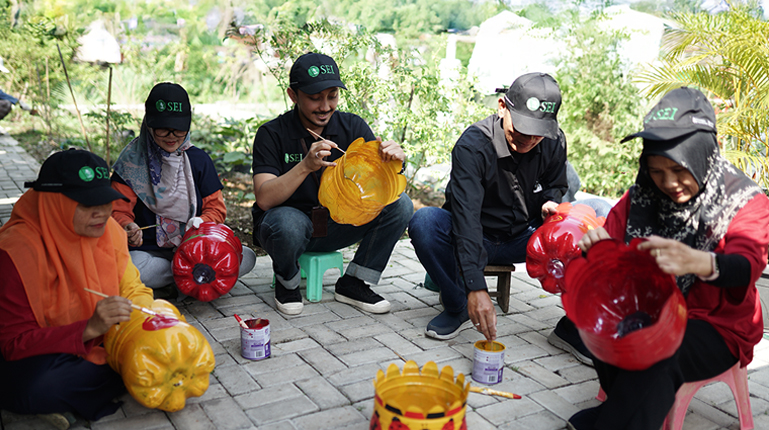
As a company committed to ESG principles, PT Surya Energi Indotama (SEI) not only focuses on financial gain, but also pays great attention to environmental sustainability and social welfare. One real form of SEI commitment to sustainability is through the Corporate Social Responsibility (CSR) program called "Jupiter Rahayu Food Garden". This program not only manages natural potential but also empowers the surrounding community to participate in implementing ESG principles. Among them:
1. Management of Kitchen Waste as Natural Fertilizer (Loseda)
One of the applications of environmental principles carried out is the management of kitchen waste. Kitchen waste which is usually difficult to decompose, is now processed with an innovative method into natural fertilizer, this program is called Lodong Sesa Dapur (Loseda). This process not only reduces the amount of waste but also provides benefits for the soil and plants in the Jupiter Rahayu food garden and in the surrounding community. Thus, SEI indirectly contributes to waste reduction and the implementation of sustainable agriculture.
2. Compost Management to Improve Soil Quality
In addition to managing kitchen waste, the Jupiter Rahayu Food Garden also implements compost bin management to recycle organic waste in the garden. The compost produced is used to improve soil quality in the garden, which in turn increases agricultural yields naturally without relying on synthetic chemicals. This greatly supports the sustainability of environmentally friendly agriculture.
3. Application of Solar Panels for Renewable Energy
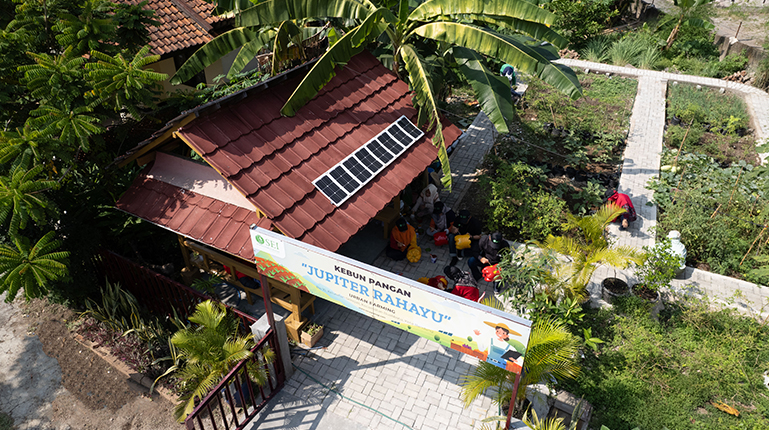
As part of its commitment to sustainability, SEI also installed solar panels on the huts in the Jupiter Rahayu food garden. The use of solar panels allows SEI to utilize clean and environmentally friendly renewable energy. In addition to reducing dependence on fossil fuels, this also provides a real example to the surrounding community about the importance of transitioning to more environmentally friendly energy.
4. Revitalization of Non-Production Land to Become Productive
One of the major challenges in land management is how to manage unproductive land so that it can provide benefits. SEI has revitalized non-productive land around the Jupiter Rahayu food garden and transformed it into productive land with various types of food crops. In this way, SEI not only improves the quality of the surrounding environment but also helps improve local food security.

SEI's commitment to ESG principles reflects the company's responsibility to the environment and society. Through CSR programs such as Kebun Pangan Jupiter Rahayu, SEI has demonstrated how ESG principles can be applied in real terms, with a focus on waste management, renewable energy, and improving community welfare. This is an important step in creating a more sustainable future, where companies, communities, and the environment can thrive together.
Together with SEI, let's switch to renewable energy!


Berita Lainnya


 Contact Us: