Category: Articles

Strengthening the Spirit of Unity in Corporate Transformation, SEI Holds 2026 Pancasila Day Ceremony
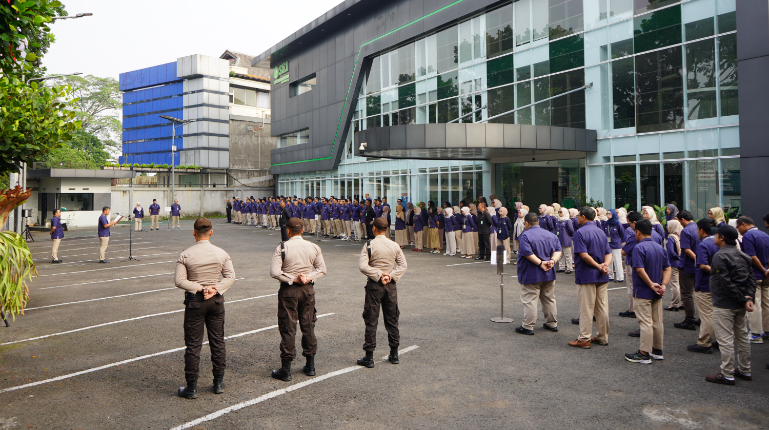
Bandung (02/06/2026) — In commemoration of Pancasila Day, observed every June 1st, and to reaffirm its commitment to the nation’s foundational values as guidelines for civic and national life, SEI held the 2026 Pancasila Day Commemoration Ceremony. The event adopted the theme “Pancasila Pemersatu Bangsa, Fondasi Perdamaian Dunia.” The ceremony, which took place at the SEI parking area, was attended by all company personnel, spanning the Board of Directors, Echelon 1 and 2 executives, and the entire workforce.
Acting as the Inspector of the Ceremony, the President Director of SEI, I Made Sandika Dwiantara, delivered a mandate on the importance of implementing Pancasila values in daily life as well as within the workplace environment.
In his address, I Made Sandika emphasized that Pancasila holds profound relevance to the ongoing transformation journey at SEI. According to him, the core values embedded in Pancasila serve as a robust foundation for building a company that is not merely business growth-oriented, but also one that upholds integrity, collaboration, and social utility for the community.
“Currently, SEI is moving toward a new phase, where we aspire not only to be a company that grows in terms of business, but also to excel in corporate culture, professionalism, and innovation, while delivering tangible contributions to national energy development,” I Made Sandika stated in his address.
I Made Sandika also urged all SEI personnel to utilize Pancasila values as a guiding compass in navigating the various challenges and dynamics of the continuously evolving energy industry. The spirit of mutual cooperation (gotong royong), unity, justice, and responsibility is expected to become the core strength in realizing the company’s future vision.
Through this Pancasila Day Commemoration, SEI reinforces its commitment to continuously fostering a corporate culture rooted in national values, strengthening synergy among company personnel, and contributing to the support of sustainable energy development for Indonesia. The spirit of Pancasila is expected to transcend being an annual symbolic commemoration, serving instead as the bedrock for every step and decision take to bring broader benefits to the nation and the state.


Berita Lainnya


From Roof Tiles to Clean Energy: Time for Rooftops to Become a Resource
The “gentengnisasi” program launched by the government is not merely about improving housing quality. Beyond that, this initiative opens up massive opportunities to deliver clean energy solutions through the utilization of a Rooftop Solar Power System (PLST Atap).
Stronger and more modern roof structures provide the ideal foundation for solar panel installations. This means that every rooftop now has the potential to transform into an efficient, sustainable, and independent source of electricity.
PT Surya Energi Indotama has proven this potential through PLTS Atap installation implementations in the Batang region. This project demonstrates how the modernization of building infrastructure can run in perfect harmony with the acceleration of the national energy transition.
By optimizing rooftop areas, rooftop solar systems deliver a range of strategic benefits :
- Long-term energy cost efficiency
- Significant reduction in carbon emissions
- Enhanced property and building value
- Direct support towards national renewable energy targets
Energy transformation does not always have to start with massive utility-scale projects. Sometimes, great change begins right above our heads—from the very roofs of our buildings.
PT Surya Energi Indotama remains firmly committed to delivering reliable and sustainable solar energy solutions for Indonesia.
Berita Lainnya

Often Thought the Same: Here are the Differences Between Renewable Energy, Clean Energy, and Green Energy
Terms like renewable energy, clean energy, and green energy are becoming increasingly popular in daily conversation and global policy. However, many people still assume these three terms have the same meaning
In fact, technically, all three refer to different concepts. Understanding this difference is crucial so we do not get trapped by inaccurate "environmentally friendly" labels. This is because an energy source might be inexhaustible, yet its process could still leave an impact on the surrounding ecosystem.
In short, the fundamental difference lies in three pillars: where it comes from (Renewable), what its residue or waste is (Clean), and its overall environmental impact (Green).
To make it easier to understand, let's learn and analogize these three differences through a simple story:
- Renewable Energy
Renewable energy is energy derived from natural resources that can be renewed naturally and continuously. This type of energy exists as a solution to depleting fossil fuel.
Imagine you have a magic tree in your yard. Every time a branch is picked for firewood, a new branch grows back instantly. You do not need to fear a fuel shortage because nature provides it endlessly
Examples: Heat from the Earth's core (Geothermal), Solar energy, Wind, Water (Hydropower), and even biomass (from agricultural or forest waste)
- Clean Energy
Clean energy focuses on minimal negative impact on the environment. Its primary focus is on low or even zero carbon emissions, so it does not produce greenhouse gas air pollution (CO2 or methane)
Now, our focus shifts to the health of the household residents. We do not want black smoke billowing in the kitchen while cooking. Therefore, we use a sophisticated stove that emits no smoke at all. The kitchen air remains fresh and healthy
Examples:
- Solar energy: Converting sunlight into electricity without emissions
- Wind power: Generating electricity through wind turbines without burning fossil fuels.
- Geothermal: Utilizing heat from inside the earth with very low emissions
- Nuclear Energy: Nuclear does not produce smoke that damages the ozone layer, but its fuel (uranium) is limited. So, it is clean, but not always renewable.
- Green Energy
Green energy is the highest rank in this hierarchy. This energy is not only clean and renewable but also comes from natural processes that strictly preserve the ecosystem, without polluting soil or water, or leaving dangerous waste.
It is not just that the materials never run out and are smoke-free, but the way they are obtained must follow "the rules". We would not want to install a stove if it meant displacing a bird's nest or cutting down a protective tree.
Examples: Sunlight (Solar) and Wind. Both are available continuously (Renewable), smoke-free (Clean), and do not damage soil or water (Green).
What are the more specific differences? Here is a quick guide to distinguish them:
- Renewable Energy: Talks about Resilience (Will the energy run out?)
- Clean Energy: Talks about Air Health (Is there pollution or carbon smoke?)
- Green Energy: Talks about Nature's Well-being (Does the process damage the ecosystem?)
The key point is that all green energy is definitely renewable and clean. However, clean energy is not necessarily renewable (such as nuclear), and renewable energy is not necessarily fully green.
References:
National Geographic: An Explanation of Renewable Energy.
Energy.gov (U.S. Department of Energy): The Clean Energy Perspective.
Green Mountain Energy: The Difference Between Green Energy, Renewable Energy, and Clean Energy.Gosustain: The Difference Between Renewable Energy, Green Energy, and Clean Energy
Berita Lainnya

Building Environmental Awareness Through the SEI “Green the Earth” Program
In recent weeks, natural disasters in the form of flash floods have struck several areas on Sumatra Island. Homes have been submerged, roads have been cut off, and many families have been forced to evacuate. This disaster is not merely a natural phenomenon but also a reflection of humanity’s relationship with the environment.
One of the factors contributing to the high risk of disasters is the declining environmental quality in various regions. Forests, which once served as a protective barrier, are now shrinking. Trees, which should be holding the soil in place, slowing the flow of water, and providing habitats for wildlife, are becoming increasingly rare. It can be said that nature is beginning to lose its balance.
It is at this point that we are reminded that contributing to the environment doesn’t always have to be a grand or complicated endeavor. One such example is planting trees, a simple act that is often seen as insignificant but actually has an extraordinary long-term impact. Every single seedling planted is an investment in the environment that will continue to benefit us for decades to come.
Further, planting trees also means restoring forested areas. Forested areas are not merely green spaces, but ecological strongholds capable of maintaining climate stability, water sustainability, and our own safety. The larger the area covered by trees, the stronger our natural resilience becomes in the face of extreme weather and inevitable climate change.
Building environmental awareness isn’t just about raising awareness—it’s also about taking action. We can start with small steps, such as planting a seedling in our backyard, adopting a tree, supporting community greening initiatives, or participating in tree-planting activities in our local area. Every action, no matter how small, makes a meaningful difference.
As a show of support for environmental conservation efforts and as tangible evidence of the company’s contribution to the renewable energy sector, SEI has launched the “SEI Green the Earth” program, an initiative designed to replace the common tradition of sending floral arrangements as birthday greetings for the company’s anniversary. SEI invites all partners and stakeholders to participate in this greening program by exchanging floral arrangements for plant seedlings.
The collected seedlings will be planted in degraded areas through reforestation activities involving the company’s media community, the public, and company employees, with guidance from the Department of Environment and Forestry. This initiative is expected to increase forest cover, restore ecosystems, and support sustainability initiatives at both the local and global levels.
In the end, this initiative is not merely a corporate program, but a collective call to action: caring for the Earth is not the responsibility of any single party, but rather our shared responsibility as human beings living on this planet. Every seed we plant is tangible proof that we care, that we want to protect our planet, and that we want to build a greener future for generations to come.
Berita Lainnya

Wattway Solar Road, a Failure That Inspires Renewable Energy Research
Wattwal Solar Road is an ambitious project in France that was once considered the future of renewable energy but surprisingly ended differently. In 2016, the French government inaugurated the Wattway Solar Road, a 1-kilometer-long road paved with solar panels, claiming it could generate up to 280 MWh of electricity per year. This energy was targeted to be enough to power streetlights in a small town with a population of around 3,000 people.
This project, which costs around 5 million euros (equivalent to 83 billion rupiah), has become a global spotlight because it is called the world's first solar-powered road. The hope is that this innovation can pave the way for sustainable infrastructure while also reducing dependence on fossil fuels.
However, the reality is different. The solar panels installed on the road surface are quickly damaged due to heavy vehicle traffic. Additionally, the road surface causes loud noises that residents nearby complain about. Worse, the energy produced is far below the target, while maintenance costs have skyrocketed.
In 2020, just four years after its official inauguration, the Wattway Solar Road project was officially closed. Although considered a failure, the project is still remembered as a pioneer in renewable energy experiments. Many researchers believe that Wattway provides an important lesson that not all innovations can be immediately implemented on a large scale without thorough technical studies.
The Wattway Solar Road case reminds us that major innovations often come with significant risks as well. Its failure serves as a reflection that the transition to clean energy requires careful calculations, ongoing testing, and technological readiness to truly deliver tangible benefits.
Nah, can you imagine if someday this technology is fully developed and can be used properly… would it be suitable to install on Indonesian roads?
Sources: BBC, The Guardian, Le Monde, DetikOto
Berita Lainnya
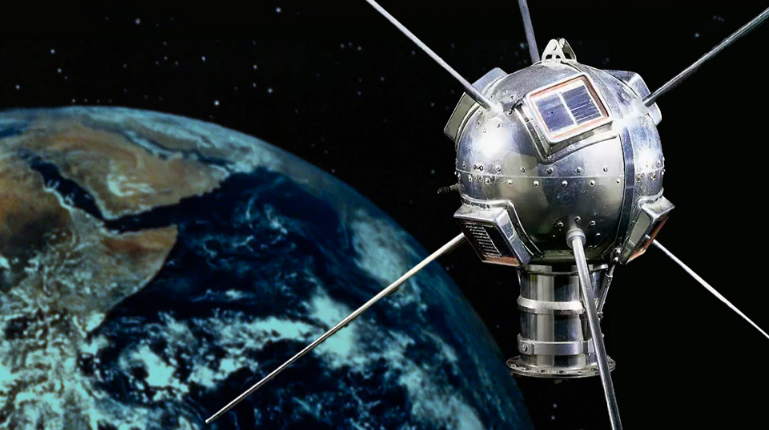
Vanguard 1, the Oldest Satellite, The First Evidence That Solar Energy Can Power in Outer Space
The history of renewable energy turns out not to have started only on Earth, but also in space. Vanguard 1 satellite, launched on March 17, 1958, is recorded as the world's first satellite to use solar cells as a power source in outer space. This achievement became a historic milestone in proving that solar energy can be harnessed to support technology in Earth's orbit.
This 1.46-kilogram satellite is an aluminum ball with a diameter of 15 cm and an antenna span of 91 cm. It is equipped with a simple solar panel capable of powering its transmitter. Although it stopped transmitting signals in 1964 due to declining power supply, this satellite remains in orbit to this day, making it the oldest artificial satellite still in space.
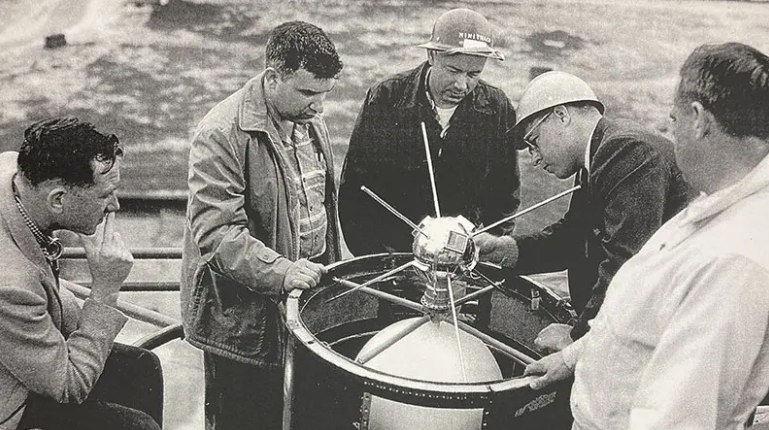
“The satellite stopped operating in 1964 when the power from the solar cells was no longer enough to power the transmitter.” Matt Bille, An aerospace research analyst from Booz Allen Hamilton who led the Vanguard 1 rescue scenario research, quoted from a Space.com report, Wednesday, April 9, 2025.
Now, after 67 years orbiting Earth, a group of scientists, engineers, and historians have proposed bringing Vanguard 1 back home. If successful, this satellite will become a valuable artifact for studying the condition of solar cells, batteries, metals, and the long-term effects of exposure to the outer space environment.
“We are not the first people to have this idea, and we hope not the last.” Bille. “But we have to wait and see if there is anyone capable of assessing whether this historical value is worth the cost.
More than just a satellite, Vanguard 1 is a witness to the birth of the solar energy era in space. It proved that solar power could go beyond Earth's limits, a legacy that continues to inspire the development of renewable energy technologies to this day.
Berita Lainnya

Surya Panel with a Unique Design in the World: When Green Energy Meets Creativity
Hi friends! Have you ever imagined a giant flower blooming at sunrise, then following its journey from east to west while generating electricity? Well, that's real, not just a scene from a fictional movie.

Its name is Smartflower, a sunflower-shaped solar panel that originated in Austria. According to the Smartflower website, this device is capable of generating energy more efficiently. Each Smartflower unit is equipped with an inverter, a battery, and an automatic cleaning system.

Uniquely, Smartflower is not the only creative work in the solar energy world. In Japan, there stands the majestic Solar Ark, a building shaped like a giant ship measuring 315 meters long and 37 meters high, containing more than 5,000 solar panels, generating up to 530,000 kWh of electricity per year. At night, this structure is illuminated with LED lights, making it a landmark that is not only environmentally friendly but also captivating to tourists. More than just a power plant, the Solar Ark also functions as an educational energy museum. Although it was planned to be demolished in 2022, the Solar Ark remains a symbol of Japan's renewable energy innovation.

Not far from interesting, in Seattle, United States, there is a public art installation called Sonic Bloom consisting of five giant flowers over 12 meters tall, each equipped with solar panels on their 'petals.' During the day, these panels absorb sunlight, and at night, the stored energy is used to power beautiful light shows. Additionally, each flower emits a distinctive sound when visitors approach, creating a unique combination of art, technology, and interactivity.
All these unique designs teach one thing: clean energy doesn't have to be stiff. With creativity, solar panels can look stunning, have educational value, and even become architectural icons.
So the question is, which solar panel do you find the most interesting, SEINergi Friend?
Berita Lainnya
Getting to Know Green Hydrogen and Indonesia’s Great Potential
In the global effort to reduce carbon emissions and achieve the Net Zero Emissions target, green hydrogen is now a major focus in the world's clean energy transition. As a country with abundant natural resources, Indonesia is in a very strategic position to take an important role in the future clean energy supply chain.
Green hydrogen is touted as the key to realizing a low-carbon energy mix, because it can be used across sectors from transportation, heavy industry, to electricity generation without producing carbon dioxide emissions. In this context, Indonesia not only has the potential as a user, but also as a producer and exporter of green hydrogen in the Asian region and the world.
Actually, what makes green hydrogen so popular? Let's take a look at the summary of Green Hydrogen!
What is Green Hydrogen?
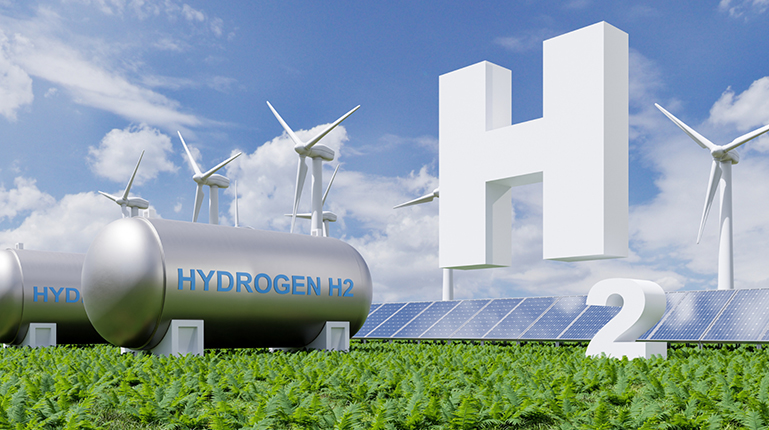
Green hydrogen is hydrogen produced through the process of water electrolysis, which is the separation of water molecules (H₂O) into hydrogen (H₂) and oxygen (O₂) using electricity from renewable energy sources such as solar, wind, or water.
Through this process of electrifying water, hydrogen becomes an effective energy carrier with high energy density. As an illustration, a hydrogen-fueled vehicle only takes 3-5 minutes to fully recharge. This is much faster than recharging the battery on an electric vehicle which takes up to 10 hours for home charging.
The term green hydrogen has only been used recently to distinguish other hydrogen that comes from natural gas or coal (gray hydrogen). While there is blue hydrogen if emissions from gray hydrogen are injected back into the ground. There is also hydrogen that is produced with the help of nuclear energy (pink hydrogen).
From this it can be said that green hydrogen is considered the only form of carbon-free hydrogen.
Benefits and Advantages of Green Hydrogen
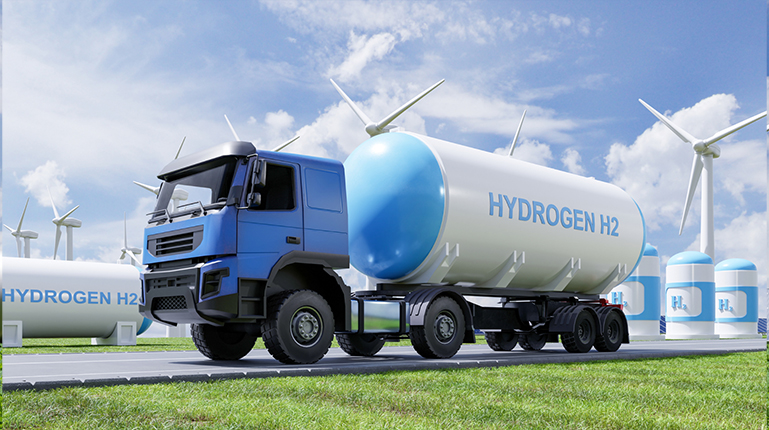
Green hydrogen has various strategic benefits including:
✅ Zero-Carbon Energy Carrier, Green hydrogen produced from renewable energy can be stored as carbon-free energy.
✅ Long Term Storage Solution, Hydrogen tanks have a larger capacity and are easier to increase in capacity than batteries, and can be used as a source of electrical energy when needed.
✅ Alternative to Diesel Backup Power, more environmentally friendly and suitable for remote areas and as a power backup.
✅ Promising Market Potential, Based on data quoted from plnp_upkendari, the global green hydrogen market could reach USD 90 billion by 2030.
The Huge Potential of Green Hydrogen in Indonesia
Indonesia has tremendous potential to produce green hydrogen on a large scale. With the wealth of renewable energy spread across various regions, quoted from katadata.co.id the technical potential of installed energy capacity for green hydrogen production in Indonesia is estimated to reach more than 38 GW, with the following details:
- Sumatera Island: 6 GW
- Jawa Island: 4 GW
- Kalimantan Island: 7 GW
- Sulawesi Island: 3 GW
- Maluku & Papua Island: 16 GW
- Nusa Tenggara Island: 2 GW
Not only that, according to national energy projections, hydrogen demand in Indonesia is expected to increase significantly after 2030, with an estimate of 2 to 5 million tons per year in 2040. This figure shows the strategic need to start building the foundation of a green hydrogen ecosystem early on, starting from infrastructure, technology, regulations to industry partnerships.
Green hydrogen plays an important role in the decarbonization strategy of key sectors, especially the industrial and heavy transportation sectors. For Indonesia, the use of green hydrogen not only supports the energy transition, but also opens up new economic opportunities based on green technology, increases global competitiveness, and creates clean energy-based jobs.
Green hydrogen is not just an energy technology, but a concrete step towards a clean, independent, and sustainable future for Indonesia. With the synergy of government, industry, and society, Indonesia can play a central role in the world's green energy map.
Data and information sources: katadata.co.id, plnnp_upkendari
Berita Lainnya
Realizing Green Industry, Now Textile Industry Switches to Renewable Energy
The global textile industry is currently undergoing a major shift towards more environmentally friendly production practices. This is driven by the European Union's carbon tax policy on imported products entering their territory. This policy requires the Indonesian textile industry to immediately adapt by implementing sustainable and low-carbon production processes in order to remain competitive in the international market. Now the application of solar energy in the textile industry environment is increasingly widespread. In addition to saving electricity, reducing carbon emissions and being environmentally friendly can be generated in the industry and product competitiveness can be optimized.
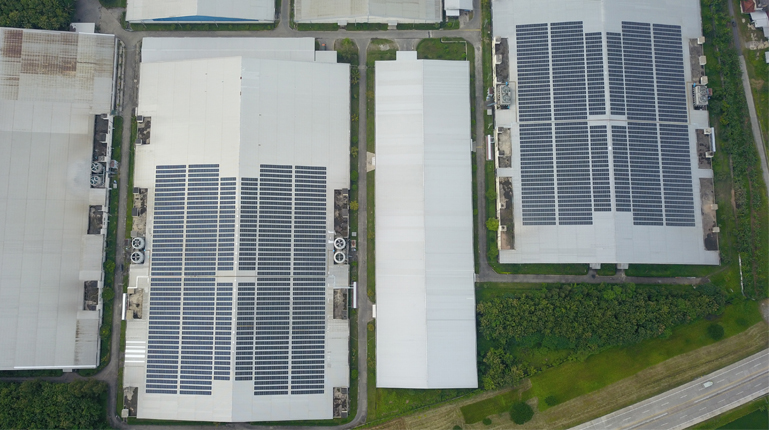
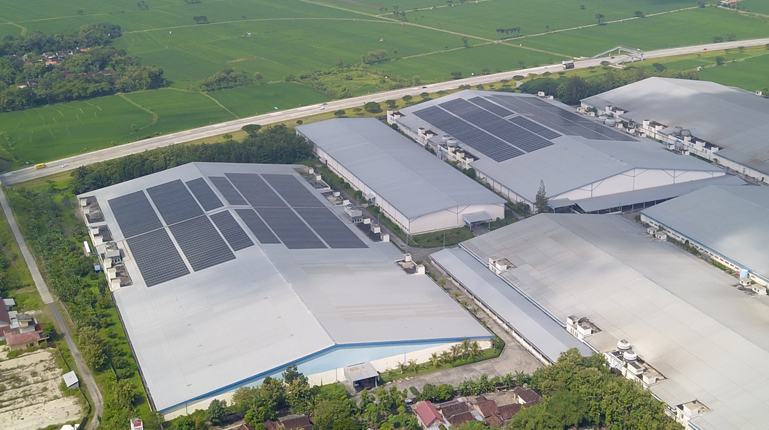
PT Sembcorp Energy Indonesia and PT Surya Energi Indotama (SEI) as Engineering, Procurement, Construction (EPC) built a Solar Panel Rooftop with a total capacity of 4.9 MWp at PT Delta Merlin Sandang Tekstil 1, Sragen, Central Java. The purpose of installing this Solar Panel Rooftop is as a form of contribution to an environmentally friendly industry, as well as optimizing the clean energy produced by the Solar Panel Rooftop. The Solar Panel Rooftop system used is an on-grid spread across 2 buildings.
"This renewable energy is cheaper than what we have been running, the hope is that from an operational perspective we can reduce costs, so that our production can compete again," said Jordi Pratama, Factory Manager of PT DMST 1.
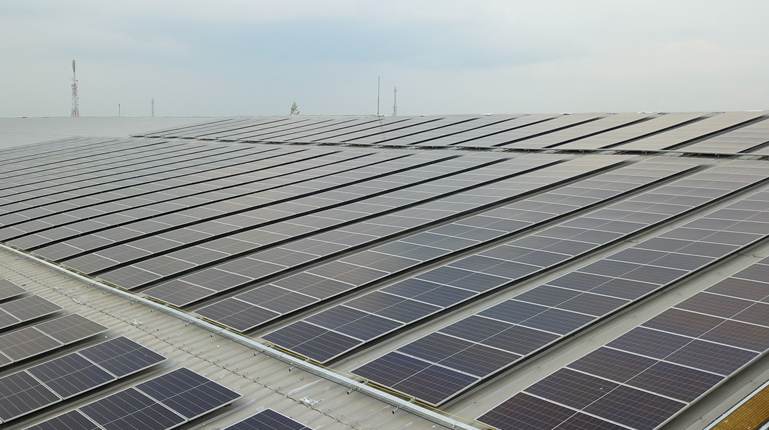
In the course of this Solar Panel Rooftop project, intense communication and coordination are the main roles with related parties. "The challenges we face are weather factors, where entering the rainy season, the second is the Lifting process, we have to distribute more than eight thousand PV Modules spread across 2 buildings, Alhamdulillah even though there are many obstacles in the field, this project can be completed," said Asep Surojudin, SEI Site Coordinator.
With full precision and proper coordination, this project has been completed and its benefits can be felt. It is hoped that the Solar Panel Rooftop can have a positive impact on the operational side of the factory. "For SEI, the involvement of this Solar Panel Rooftop project is real proof of our commitment to supporting clean and renewable energy in Indonesia," said Febrian Lutfi, Project Manager SEI.
Let's support clean energy in Indonesia!
Berita Lainnya
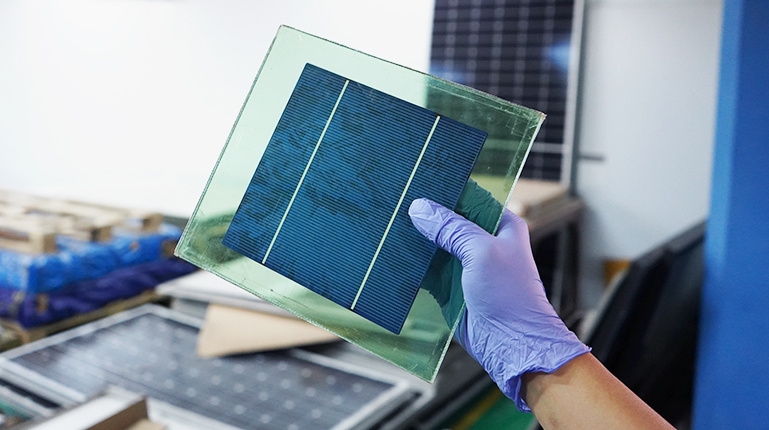
Early Traces of Indonesian Solar Energy: The First Solar Module in Len in 1998
PT Len Industri (Persero), as the parent company of PT Surya Energi Indotama, has played an important role in the history of solar energy technology development in Indonesia.
Len's commitment to national energy independence began in 1986, when the company introduced Solar Home System (SHS) technology to reach remote areas that had not been connected to conventional electricity. This initiative became the starting point for Len's real contribution to providing clean energy for the community.
Len's journey continued significantly in 1998, with the success of creating a solar module prototype. This solar module is the result of collaboration between Len, Solarex Australia, and the Agency for the Assessment and Application of Technology (BPPT). The solar module became the initial milestone in the development of photovoltaic technology in the country.
Not stopping at the prototype stage, Len developed a locally produced solar module with an initial capacity of 1.2 MW per year in the same year. Along with the development of technology and market needs, production capacity has continued to increase
- 10 MW per year in 2009
- 46 MW per year in 2015
- 71 MW per year in 2020
A major achievement was achieved in 2016, when Len succeeded in becoming the first largest solar panel project implementer in Indonesia, namely the IPP PLTS Oelpuah Kupang with a capacity of 5 MW. This project is a symbol of the clean energy transition and the revival of the national photovoltaic industry.
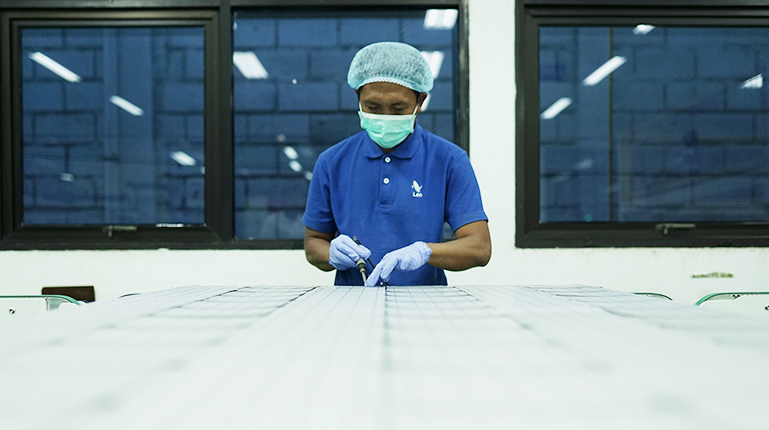
Over time, Len also continues to develop production facilities and obtain various national and international quality certifications, strengthening Len's position as a Pioneer Solar PV Manufacturing in Indonesia.
Now, the solar panel production facility has been acquired by PT Surya Energi Indotama as a subsidiary, to continue the development and industrialization of solar energy technology in a more focused and integrated manner.
"From one small solar module in 1998, to a big step for the country"
Through PT Surya Energi Indotama, we continue to be committed to providing reliable and sustainable renewable energy solutions for all Indonesian people**
Berita Lainnya
 Contact Us: